
|


ЭНЦИКЛОПЕДИЯ РАДИОЭЛЕКТРОНИКИ И ЭЛЕКТРОТЕХНИКИ Медная многодиапазонная УКВ антенна Кактус. Энциклопедия радиоэлектроники и электротехники
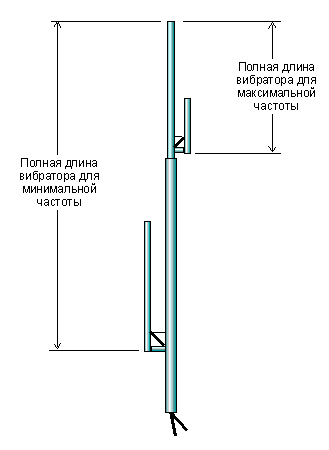
Энциклопедия радиоэлектроники и электротехники / Антенны УКВ Мы надеемся что Вы уже знакомые с конструкцией стандартной J-антенны, так что не будем вникать в ненужные подробности. Предлагаемая антенна является разновидностью J-антенны и может с большим успехом применяться на один, два, три и более диапазонов. Питание данной антенны может осуществляться как от отдельных кабелей для каждого диапазона, так и одним кабелем, правда первый вариант наиболее предпочтителен. В конструкции антенны нет никакой хитрости, только не забывайте, что полная длина антенны определяется самой низкой рабочей частотой. Другими словами, если Вы используете антенну на 144, 430 и 900 МГц, то общая длина излучателя будет соответствовать длине антенны 2-х метрового диапазона, т.е. около 150 см.
Коаксиальные кабели пропускаются внутри центрального штыря к соответствующим элементам. Между элементами антенны используются Т-образные стыки.Проблема при конструировании антенны состоит в том, что чем больше диапазонов Вы используете, тем труднее обеспечить равномерность SWR на всех диапазонах. Таблица размеров антенны для некоторых диапазонов
Для лучшего результата, сначала изготовьте самый высокочастотный вибратор, например для диапазона 435 МГц. Вибратор изготавливается из медной трубки диаметром 9 мм, согласующая линия - из медной 6-мм трубки. Конечно, конечный продукт будет в форме "J".Теперь изготовим элементы следующего диапазона, например на 223.5 MHz, добавляя трубку на T-соединителе, который является базовым креплением 435 MHz антенны. Мы использовали 12 мм трубку для вертикального излучателя и 12 мм для шлейфа этой секции. Теперь изготовьте 146 MHz антенну, не забудьте что полная длина антенны - самая низкая частота которую вы будете использовать. Мы используем 18 мм трубку для вертикального излучателя и 12 мм для шлейфа. Шлейф должен быть параллелен вертикальному излучателю, но он может располагаться с любой стороны относительно вертикальной оси. Мы предпочитаем размещать их на попарно противоположных сторонах, но вы можете делать их все с одной стороны, если хотите.Окончательно внешний вид такой антенны напоминает кактус, откуда и ее название. Последнее примечание: Если вы используете 12 мм трубку для всей конструкции, на 2-метровом шлейфе добавьте 6 мм к длине, чтобы можно было произвести подстройку. Изготовленная антенна после настройки имеет SWR не хуже 1.2-1 на всех диапазонах при условии, что для каждого диапазона используется свой питающий кабель. Спаяйте все элементы перед установкой коаксиального кабеля. Чтобы установить кабели просверлите отверстия диаметром 6 мм в верхей части горизонтального элемента Т-соединителя ближе к вертикальной части (в углу) и просуньте через них кабели. Наслаждайтесь результатом! И еще одно: вначале, пока Вы не освоили изготовление такой антенны, не делайте более трех диапазонов на одном вибраторе. Использование одного кабеля для питания многодиапазонной антенны (К сожалению, на английском). Single Coax Feed to Multi-Band Copper Cactus Antenna. There are three connection possibilities to feed the multi-bandcopper cactus antenna with a single feedline or coax. However, it isimperative that you use the proper coax for the highest band ofoperation, RG58 just won't cut it and even RG8 in lengths longer than25 feet is marginal in 440 operation. For all single coax feeding methods, the antenna will requirere-tuning to obtain the lowest SWR for each band. This is accomplishedby installing in the pipe cap of the tuning stub on each band ofoperation a brass machine screw of at least 2 inches in lengthvertical out of the cap. The first and simplest connection method, albeit the hardest totune, requires that you place a shorting wire on all but the lowestband of operation. If you are building your antenna from the N0ZOI(now KG0ZP) plans for "The Copper Cactus Antenna" and for examplebuilding a tri-bander for the frequencies of 144, 220 & 440 MHz, theshorting wires should be placed between the normal connect points forthe shield and center conductor of each band. The 440 band shortingwire should be placed exactly 1 inch above the top of the horizontalpipe of the 440 tuning stub, the 220 band shorting wire should beplaced exactly 1-1/2 inches above the horizontal pipe of the 220tuning stub and your coax suitable for 440 operation should beconnected exactly 2-1/4 inches above the horizontal pipe of the 144tuning stub with the center of the coax going to the main vertical andthe shield to the tuning stub (this is just the reverse of theconnections shown on the plans and in the methods below), keeping thecenter conductor length as short as possible. For best results, tunethe antenna from the highest band to the lowest, however, using theshorting method does create quite a bit of interaction. The second method is easier to tune than the first method, but doesrequire placing 1/4 or 1/2 wavelength matching sections for all thebands of operation. If you are building a dual band antenna, the useof a T-Connector simplifies the project. Please bear in mind that youcannot use a 1/4 wavelength matching section on one band and a 1/2wavelength matching section on another band, plus each band ofoperation requires the use of a matching section, including yourlowest band of operation. Unfortunately, the connections will beinside the vertical section, a feat not easy to accomplish, but itdoes make tune-up much faster and easier than the shorting strapmethod shown above. The center connector of the coax matching sectionsis affixed to the tuning stub and the shield to the vertical section,keeping the center conductor length lead as short as possible. The third method requires no antenna re-tuning from thespecifications given on the plans and random length pieces of coax maybe used. However, a relay switching assembly must be constructedinside a weathertight enclosure or the use of a duplexer for dual-bandoperation or tri-plexer for tri-band operation can be utilized. Asabove, the center conductor of the coax goes to the tuning stub andthe shield to the vertical. I will note that I have used random lengthcoax, without *-plexers or relay assemblies, however, this methodworked on only three of five duplicate antennas using the same randomlength pieces of coax on each. Each band showed an SWR of less than1.025 to 1 until connected together, then two of the antennas showedan SWR of over 3 to 1 and three antennas were less than 1.8 to 1across all bands without re-tuning. A little re-tuning brought the SWRdown to below 1.2 to 1 on two of the antennas, but we could notacheive anything lower than the original 1.8 to 1 on the third. So ifyou use random length coax and no relays or *-plexers, good luck. NOTE: The connect distance above the horizontal member on each bandis selected for an impedance of around 50 ohms, moving the connectpoint up or down from this set point can and will increase theimpedance as high as 650 ohms within a distance of 1/2 inch eitherside of the established proper connect point. Автор: Gary, KG0ZP; Публикация: Н. Большаков, rf.atnn.ru
Расставание действительно может причинять физическую боль
16.09.2026 Научно доказана невозможность создания нейтринного лазера
16.09.2026 Индекс нижнего белья раскрыл состояние швейцарских почв
15.09.2026
▪ JVC TH-A25 - бюджетный домашний кинотеатр в коробке ▪ Немецкие города могут запрещать дизельные автомобили
▪ раздел сайта Синтезаторы частоты. Подборка статей ▪ статья Плоскорез Рудулис. Чертеж, описание ▪ статья Где обитают голубые киты? Подробный ответ ▪ статья Специалист-аналитик. Должностная инструкция ▪ статья Лесной воздух в комнате. Энциклопедия радиоэлектроники и электротехники ▪ статья Абазинские пословицы и поговорки. Большая подборка
Главная страница | Библиотека | Статьи | Карта сайта | Отзывы о сайте
www.diagram.com.ua |



 Смотрите другие статьи раздела
  Последние новости науки и техники, новинки электроники: